
Water around a water heater is one of the most common calls we get, and the first question is always the same: where is it actually coming from? Water travels along pipes and collects wherever the floor dips, so the puddle is often nowhere near the source. It might be the temperature and pressure relief valve or its discharge line, the drain valve near the bottom of the tank, the hot and cold connections on top, condensation on a cold tank, or a nearby pipe that has nothing to do with the heater. It might also be the tank itself, and that answer changes everything. In Charlotte, NC, we start every leak call by finding the true source.
Our diagnosis is methodical. We dry the area, check the relief valve outlet and discharge pipe, inspect the drain valve, and follow the hot and cold lines up to the fittings on top of the tank. On gas units, we look under the burner access for water, which can point to condensation or, more seriously, a failing tank. If the relief valve has been discharging, we measure static water pressure and check for thermal expansion, since a closed plumbing system without an expansion tank can spike pressure every time the burner runs. Only then do we recommend a fix.
Once we know the source, the repair is usually straightforward. A new T&P valve, a brass drain valve in place of a weeping plastic one, fresh dielectric fittings or supply connectors, and an expansion tank or pressure-reducing valve where pressure is to blame can all be handled on the spot. A corroded tank is different. Nothing will reliably seal a rusted tank, so we explain replacement honestly and walk through the choices. Before we leave, we can add a drain pan with a drain line and a leak sensor, especially for heaters in attics, closets, or upstairs. Call (980) 304-6822 for leak repair in Charlotte.
Most of our service calls are for Water Heater Repair in Charlotte and Water Heater Replacement in Charlotte. Start there if you're not sure what you need.
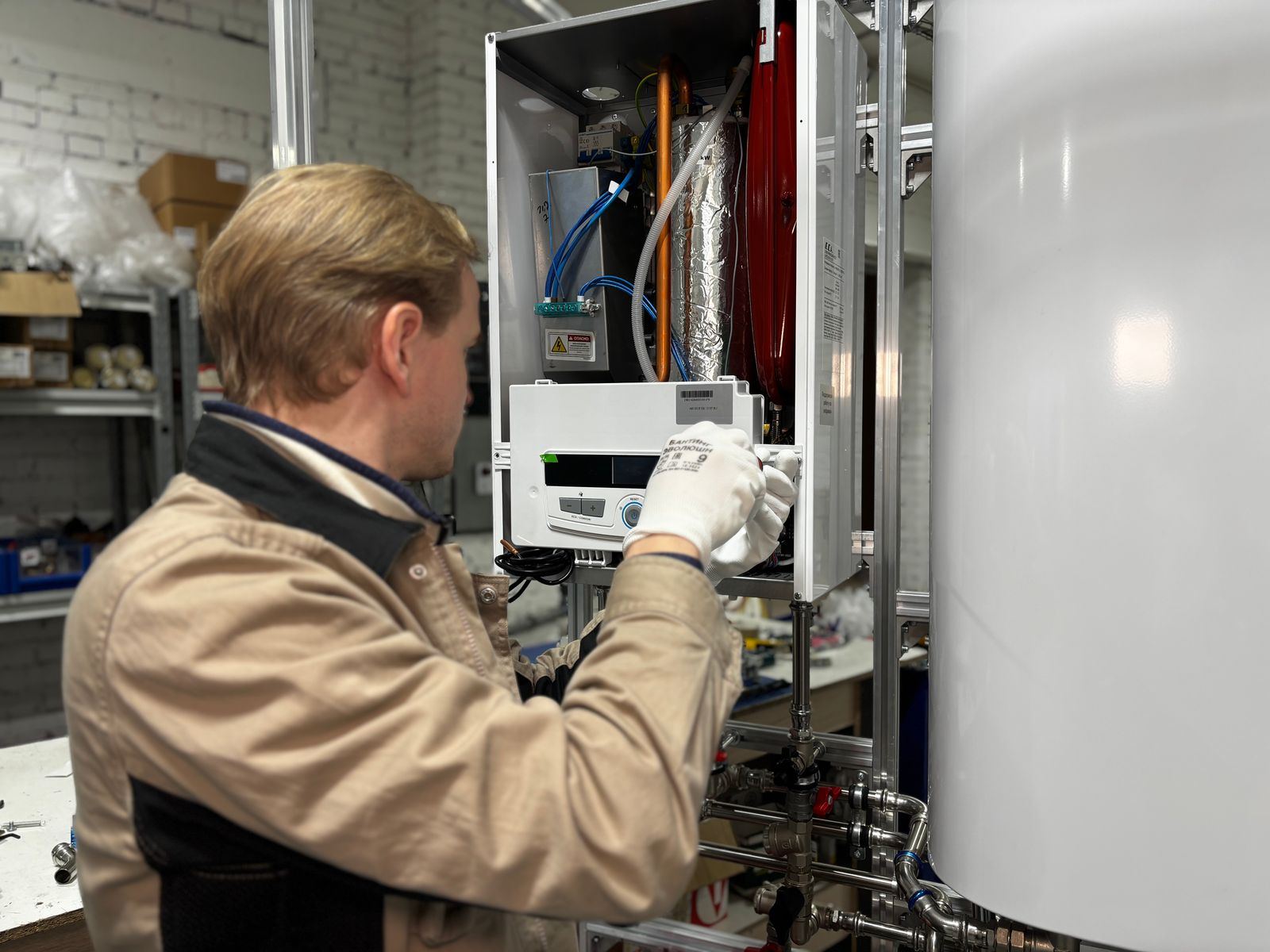
Signs You Need Water Heater Leak Repair in Charlotte
Recognizing the warning signs early can save you money and keep a slow drip from turning into a flooded utility room. If any of the following sound familiar, it's worth having the unit checked:
- A puddle or damp spot on the floor around the base of the tank
- Higher water use with no obvious explanation
- Rusty or discolored hot water paired with dampness at the base
- Moisture or mineral crust at the end of the relief valve pipe
- Warped baseboards or stained drywall beside the water heater
- Mineral buildup or rust around the hot and cold connections
- Steady drips from the drain valve near the base
- Dampness in the combustion area of a gas unit
A Slow Leak Never Stays Slow
A little rust-colored water or a relief valve that drips now and then can be the first hint of a tank that is close to the end. A quick call to (980) 304-6822 gets a technician out to check it before it becomes an emergency.
Water Heater Trouble? Call Us.
We'll diagnose the problem and give you a straight answer on the fix.
Call (980) 304-6822 TodayWhat Homeowners Ask Us Most
Why Hire a Professional for Water Heater Leak Repair?
Leaks look simple and often are not. Water can start at a top fitting, run down under the jacket, and show up at the base, and sweating tanks add confusion. The risks go beyond a wrong part. Plugging a dripping relief valve removes the protection against excess pressure and heat, forcing a corroded connection can split it open, and electric heaters bring high-voltage wiring into a wet area. When the tank itself is the source, no DIY fix will hold for long.
Our technicians trace leaks methodically and fix the cause, not just the drip. We dry the unit, watch for fresh water, put a gauge on the system whenever the relief valve is involved, and check for thermal expansion problems that make valves weep. We replace valves and fittings with quality parts, swap plastic drain valves for brass, and add an expansion tank or pressure-reducing valve when pressure is the root problem. If the tank has failed, we tell you directly and explain replacement options, including the drain pan and leak protection that can keep the next failure from soaking your floors.
From Your Call to Hot Water
Every visit follows a step-by-step method built around testing first and replacing parts only when the readings call for it. Here's exactly how a typical visit unfolds:
Isolate the Leak
We help you close the cold supply and shut off gas or power, then move valuables and set up containment so the damage stops spreading.
Pinpoint the Leak
Every likely source gets checked: T&P valve, drain valve, inlet and outlet fittings, connectors, condensation, and the tank itself. Nothing gets replaced on a guess.
Test the Pressure
We gauge household water pressure and look at expansion control, because a closed system without room to expand spikes pressure every heating cycle.
Fix and Confirm Dry
We replace the failed part, refill and purge the tank, restart the heater, and confirm every joint stays dry. A leaking tank gets an honest replacement recommendation instead.
Questions About Water Heater Leak Repair?
Call Charlotte Water Heater to talk through your situation with an experienced technician.
Get Help: (980) 304-6822Simple Ways to Extend Your Water Heater's Life
Routine maintenance is almost always cheaper and easier than an early replacement. Here's where to begin:
- Annual flushing removes sediment that traps heat against the tank floor
- Put a water leak sensor on the floor next to the tank so a drip gets noticed early
- A quick monthly look at the base, valves, and top connections catches leaks early
- Check your water pressure; if it runs above about 80 psi, a pressure-reducing valve protects the tank and valves
- An expansion tank that is present and properly charged keeps the relief valve from opening every cycle
- Replace a depleted anode rod before the steel tank becomes the next target for corrosion
- A properly drained pan under the tank catches small leaks before they reach your floors
Doing It Yourself vs. Hiring a Technician
Relighting a pilot by following the label is one thing. Diagnosing a gas valve, a burned-out element, a dirty flame sensor, or a tankless error code calls for meters and know-how that a pro brings. Consider the following comparison:
| Consideration | DIY Attempt | Professional Service |
|---|---|---|
| Diagnosis | Replace parts until the drip stops | Every valve and fitting checked in order |
| T&P Valve | Drip silenced, pressure problem left behind | Root cause fixed so the new valve stays dry |
| Corroded Connections | Tightened until the fitting cracks | Dielectric unions and connectors rebuilt |
| Condensation vs Leak | Normal sweating treated as a leak | Condensation identified before money is spent |
| Water Damage | Damage prevention skipped | Drain pan, drain line, and leak sensor options |
| Result | Temporary fix that may fail again | Leak solved and cause corrected |
Let's Get Your Hot Water Back
Get your hot water back before a small fault turns into a flooded floor. Charlotte Water Heater is ready to respond fast.
Call (980) 304-6822 NowWater Heater Leak Repair Near Charlotte
We bring water heater leak repair to homes and businesses in town and across the nearby communities. Pick your area to see local details.