
A standard electric tank has two elements and two thermostats that take turns instead of heating at the same time. The upper thermostat has priority: it heats the top of the tank first, then hands power down to the lower element, which does most of the day-to-day work. Above the upper thermostat sits a high-limit switch, the red reset button, which cuts power if the water ever gets dangerously hot. That arrangement makes symptoms a real clue. No hot water at all usually points to the upper element, the upper thermostat, a tripped high-limit, or the breaker. Hot water that runs out quickly usually means the lower element or lower thermostat has quit. In Charlotte, NC, we see all of these every week.
Resetting a tripped red button or swapping an element blindly rarely solves the problem for long. Our approach in Charlotte homes is to test the whole circuit. We confirm the breaker and the 240-volt supply, measure the resistance of both elements, check each element for a short to ground, and verify that each thermostat opens and closes as it should. The wiring gets inspected too, from the junction box to the thermostat terminals. A high-limit that keeps tripping almost always has a reason, such as a thermostat stuck closed or a grounded element, and we find it so the button stays set.
The repair itself is usually the easy part. Elements, thermostats, and high-limit switches are standard parts, and our trucks carry the common sizes. Replacing an element means shutting off power, draining the tank, installing the new element, and refilling completely before power is restored, which protects the new element from a dry fire. Damaged wiring, loose terminals, and sediment on the tank bottom are handled in the same visit. If replacement makes more sense, we install new electric heaters sized to your household's first-hour demand, confirm the breaker and wire gauge are correct, and add the expansion tank, drain pan, and strapping your local code requires. Need electric water heater repair in Charlotte? Call (980) 304-6822 today.
Our two most requested services are Water Heater Repair in Charlotte and Water Heater Installation in Charlotte. That's the place to start for most homes.
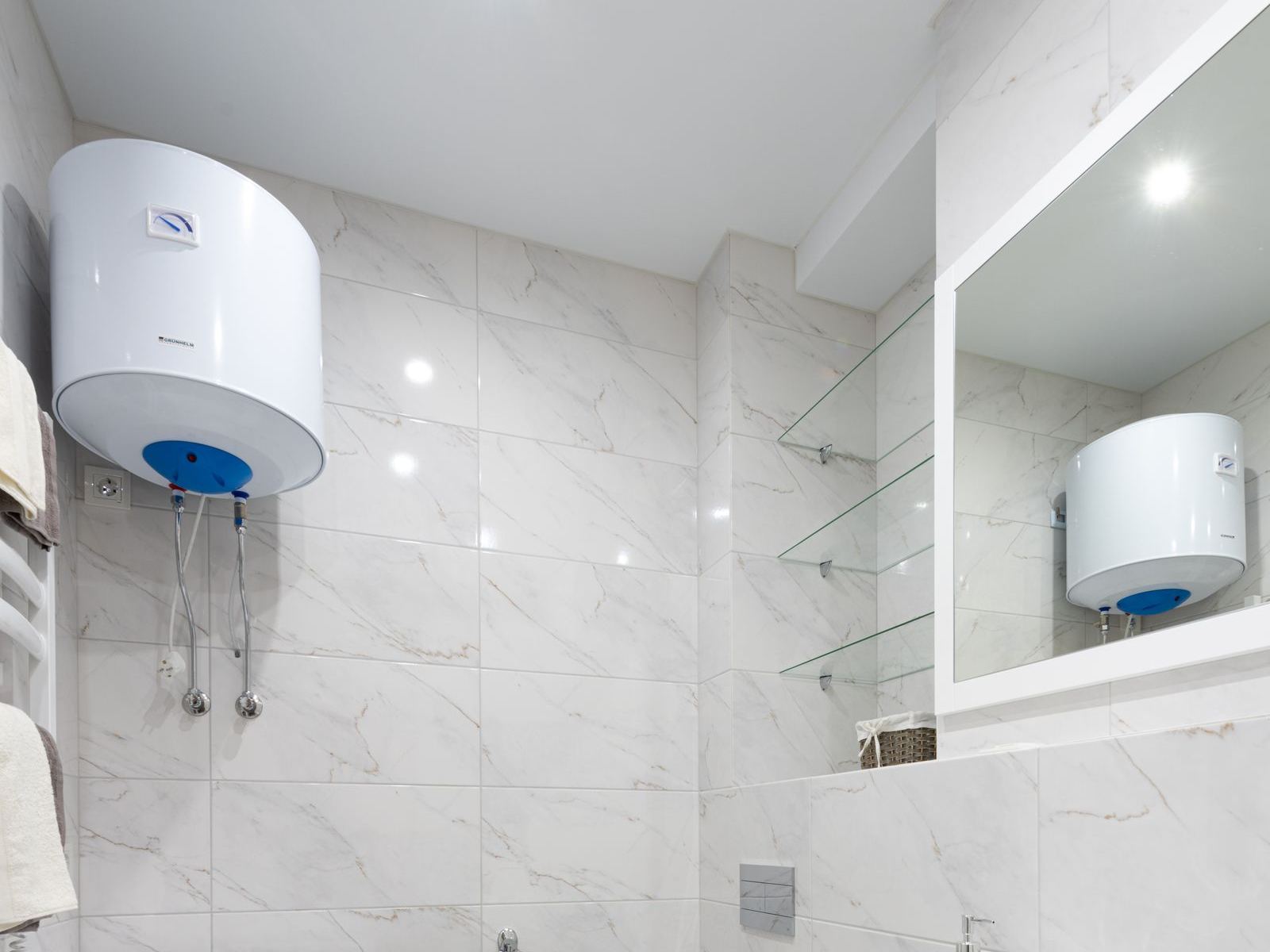
Signs You Need Electric Water Heater Services in Charlotte
Recognizing the warning signs early can save you money and keep a slow drip from turning into a flooded utility room. If any of the following sound familiar, it's worth having the unit checked:
- Browned wiring or a burnt odor from behind the access cover
- A tank that has stopped heating completely
- Rust-colored hot water or moisture around the heater
- Popping, sizzling, or crackling sounds from the tank
- Dangerously hot water, a sign a thermostat may be stuck
- The water heater breaker tripping over and over
- A shower that turns lukewarm much sooner than it used to
- The high-limit reset popping again after you push it
A Slow Leak Never Stays Slow
A worn-out anode rod, a sediment-choked tank, or a weak thermocouple rarely fixes itself, and the repair usually costs more the longer it waits. Don't wait. Get Charlotte Water Heater on the phone at (980) 304-6822 and we'll get a technician scheduled.
No Hot Water? We Can Help.
Our experienced technicians are standing by to help.
Call (980) 304-6822 NowFrequently Asked Questions About Electric Water Heater Services
The Benefits of Professional Electric Water Heater Services
Consider the risks first. A standard electric water heater is a 240-volt appliance on a dedicated circuit, and both thermostats sit a finger's width from live terminals. A slipped screwdriver or a missed step in shutting off power can cause a serious shock or an arc flash. Then there is the diagnostic puzzle: no hot water can mean a tripped breaker, a tripped high-limit, a failed upper element, or a bad upper thermostat, and every guess that misses costs you a part and an afternoon. Element replacement adds another trap, because an element powered before the tank is full burns out almost instantly.
The value of calling a pro is certainty. We test instead of guessing, from element resistance and ground-fault checks to thermostat operation and supply voltage. We repair heat-damaged wiring properly, tighten or replace terminal connections, and refill the tank completely before power goes on, so a new element is never destroyed by a dry fire. And because some electric heaters are simply worn out, we give you a straight answer on repair versus replacement, including whether a heat pump water heater might make sense for your home.
From Your Call to Hot Water
Every visit follows a step-by-step method built around testing first and replacing parts only when the readings call for it. Here's the short version:
Find the Real Fault
Before anything is replaced, we confirm power at the heater and test each element, thermostat, and connection to pinpoint what stopped the water from heating.
Plain Findings & Upfront Quote
We share the readings, explain the cause, and quote the job first. On an older tank, we give you an honest repair-versus-replace answer.
Safe Repair
One visit usually does it. We replace the failed part, repair any heat-damaged wiring, and refill the tank completely before power goes back on.
Verified Heating
We prove the fix before calling it done. We verify amperage on the elements, confirm the thermostats cycle properly, and set the temperature to about 120 degrees for safety.
Not Sure What You Need?
Our technicians can assess your water heater and recommend the option that actually makes sense.
Call (980) 304-6822 TodayWater Heater Care Tips From Our Technicians
A little routine care goes a long way toward keeping a water heater running well past its expected lifespan. Here are our recommendations:
- Lift the T&P valve lever yearly to make sure it opens and reseats
- In hard water areas, a softener or low-watt-density elements can extend element life
- Never turn the breaker back on until the tank is completely full of water
- Treat a tripped high-limit as a warning sign, not a nuisance
- Replace a worn anode rod before corrosion moves on to the tank itself
- Set both thermostats near 120 degrees, because hotter water costs more and can scald
- Flush the tank regularly to keep minerals from piling up around the lower element
Should You DIY or Call a Pro?
A few tasks, like checking the temperature setting or lifting the relief valve lever to test it, are fine for homeowners, but most water heater work involves gas lines, venting, 240-volt circuits, or a tank full of scalding water, and that belongs with a professional. Here's how the two approaches stack up:
| Factor | Doing It Yourself | Hiring a Pro |
|---|---|---|
| Diagnosis | Guess between elements, thermostats, and breaker | Every element and thermostat metered |
| Electrical Safety | Live 240V terminals behind the panel | Power verified off before any work |
| Draining & Refilling | Dry-fired element burns out instantly | Tank drained, refilled, and purged of air first |
| Reset Button | Push reset and hope it holds | Cause of the trip found and fixed |
| Tank Condition | Sediment left burying the lower element | Tank and anode checked during service |
| Result | Element fails again within months | Root cause fixed and verified |
Let's Get Your Hot Water Back
Don't let a failing water heater get worse. Call Charlotte Water Heater now for prompt, professional service.
Get Help: (980) 304-6822Electric Water Heater Services Across the Charlotte Area
We serve Charlotte and its neighboring towns for electric water heater services, from quick same-day repairs to planned installs.